Rodent Removal in Garland, TX
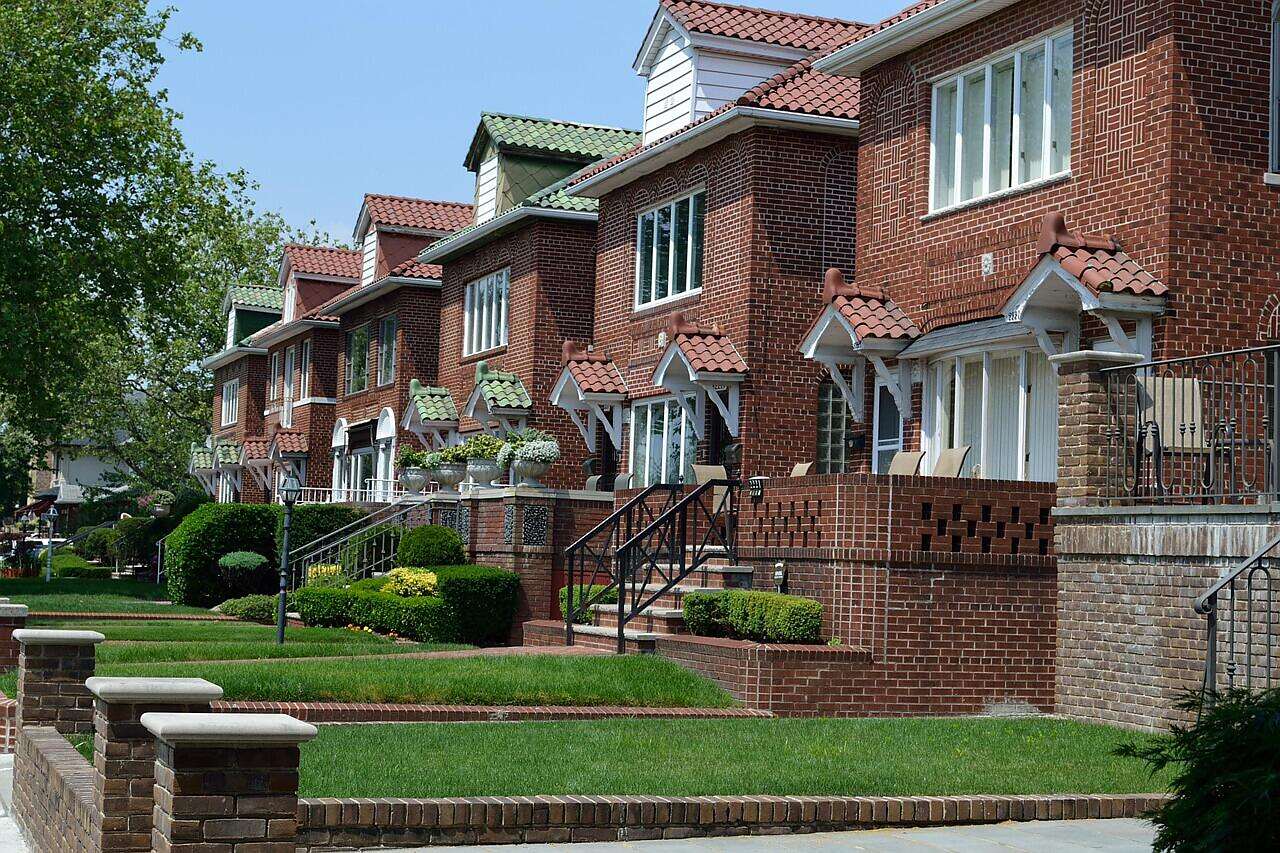
Garland runs from a pre-war downtown core through decades of brick ranch subdivisions out to the Lake Ray Hubbard shoreline, so the foundation and the water both change what a job looks like street by street.
- Pre-war core and ranch belts
- Lake Ray Hubbard shoreline
- Free inspection, written quote
Free Inspection in Garland
The free inspection establishes the build era first, because that decides whether there is a crawl space underneath. On an older core house it covers the roofline, the attic, and a crawl under the floor for skirting, foundation vents, the access door and subfloor penetrations. On a ranch or a later subdivision house it covers the roofline, the attic, the brick base course with its weep holes counted, and the garage. Either way the droppings get read for species and freshness and every opening a quarter inch or wider goes on a written list with a material against it.
Garland is roughly fifteen miles northeast of downtown Dallas, reached by I-30 and Highway 78 or across on the President George Bush Turnpike. The phone is answered 24 hours a day and inspections run seven days a week from 7am to 7pm. Call, or put the details on the contact page and a dispatcher rings you back with a time.
Three building eras across one city
Garland has an older core, a very large middle band of brick ranches, and newer development out toward the lake, and each era fails differently.
The core around the original downtown holds pre-war houses, some of them old enough to sit on pier-and-beam, since Dallas-area construction did not move to slab-on-grade until around the mid 1960s. Those have a crawl space with a skirting wall, foundation vents, an access door and plumbing penetrations through the subfloor, and some are wood frame rather than brick veneer, which replaces the weep hole count with siding gaps and aging trim.
The middle band is 1950s to 1970s brick ranch on slab, built in quantity, and it is the bulk of the city. Low-pitched roofs, long soffit runs, attached or detached garages, vented attics of blown-in insulation, and a base course of brick carrying thirty or forty weep holes per elevation. Components of that age have usually reached the end of their service: garage door seals worn to daylight, soffit panels lifted, gable screens rusted.
Out east toward the shoreline the development is newer, slab, and closer to the water. The openings are the same list in better condition, and the pressure from outside is higher.
Lake Ray Hubbard and Duck Creek
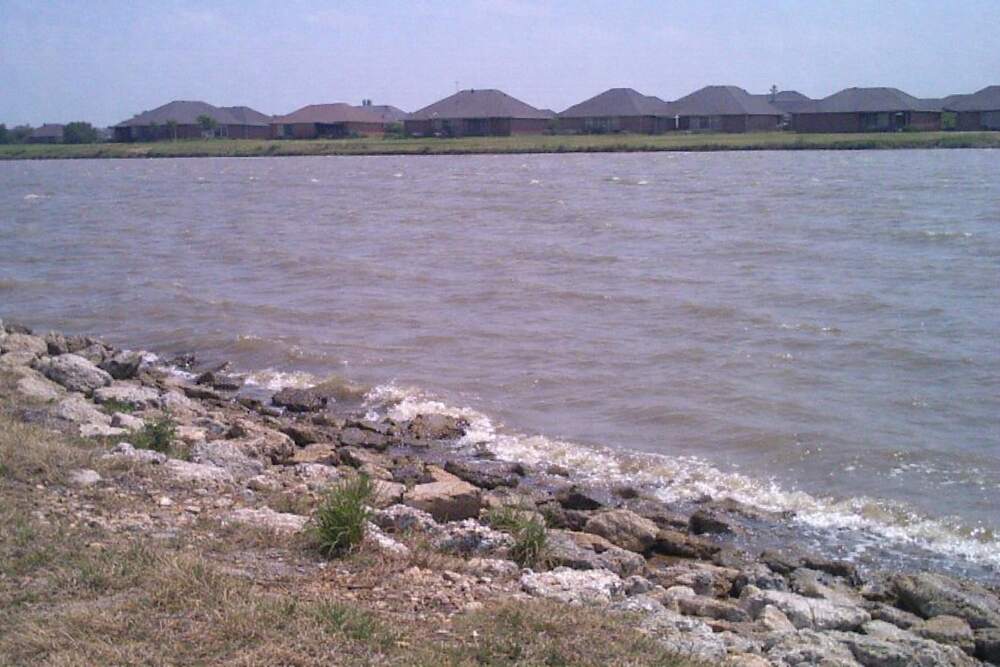
Garland has reservoir shoreline on its eastern edge and two creek systems through the middle of it, all of which hold rodents independently of any building.
Lake Ray Hubbard brings wooded shoreline, coves, brush and a permanent water supply up against residential streets on the east side. Duck Creek and Rowlett Creek run through the city with wooded banks and greenbelt corridors. Norway rats stay close to the ground and work banks, brush and burrow systems, reaching buildings under garage doors and through broken weep holes, which describes shoreline and creek-side streets precisely. Roof rats use the tree cover along the same corridors and move up to a roofline; UF/IFAS puts their range at about 150 yards from the den.
Boat storage, lakeside sheds and covered equipment areas add structures that nobody inspects, and stored feed, birdseed or tackle inside one of them is a feeding station within a short run of a house.
The practical consequence on a shoreline or creek-side street is that the closure list needs to be finished rather than mostly done, and that brush, ivy and wood piles get cleared back from the structure and the fence line as part of the program.
What We Handle in Garland
Six services cover the range of Garland property, and the build era decides which ones apply.
- Rodent exclusion: the whole closure scope, roofline and base of the house, written up opening by opening.
- Roof rat removal: attic trapping on the ranch streets where sixty-year-old trees now reach the roof.
- Crawl space rodent control: skirting, vents and subfloor penetrations on the older core houses built before 1965.
- Mouse removal: kitchen and garage trapping with the weep holes and the garage door closed behind it.
- Attic cleanup: droppings, nests and soaked blown-in insulation removed, then the attic sanitized.
- Dead rodent removal: the carcass located and removed when a bait-only plan has left a smell in a wall.
A Typical Garland Job
The situation: a 1968 brick ranch four streets from the lake shore, with a detached garage and a boat under a carport beside it. Droppings in the garage and the carport storage box, gnawing heard under the kitchen floor, and no noise in the attic.
What gets done: the house turns out to be slab, so the gnawing is traced up a plumbing chase from the base course rather than from underneath. Twenty-two weep holes are open on the carport elevation, the gas line penetration has a gap, and a bathroom vent hood has lost its flap. The detached garage has an inch under the door and an unscreened gable opening, and the carport storage box holds a chewed bag of birdseed with a nest behind it. The weep holes, the penetration and the vent hood are closed, the garage gets a threshold strip and hardware cloth at the gable, and traps go along the garage plate, in the chase behind the dishwasher and in the carport.
How it turns out: seven catches in the first week, two at the second check, nothing at the third. The birdseed moves into a metal bin, the nest is removed as a small cleanup line, and the closure list covers two buildings with twenty-six items.
What This Costs in Garland
Garland quotes vary by era more than by size, and these published bands are the figures each line should be checked against.
| Line | Band | Source |
|---|---|---|
| Sealing the building | $500 to $2,500 | HomeGuide 2026 national |
| Trapping and removing the animals present | $250 to $1,200 | HomeGuide 2026 national |
| Typical Dallas-area rat job | $224 to $1,192, averaging around $693 | Angi's Dallas figures |
| Dead animal located and removed | $150 to $500 | HomeGuide 2026 national |
| Return visit | $50 to $150 | Angi's Dallas figures |
An older core house with a crawl space sits higher in the sealing range, because that perimeter is a whole extra region. A ranch on a slab sits lower, with the weep hole count and the roofline doing the work. A detached garage, a carport storage area or a boat shelter each add a line of their own. Every band is a typical-job figure, and the free inspection is what turns the counts into a quote.
Rodents in the attic
What is happening above the ceiling, explained.
Video: Rodents in your ATTIC!? Here's what you do, from Twin Home Experts.
Common Questions in Garland
What callers from Garland ask before booking.
The property
Does my Garland house have a crawl space?
It depends on the build year and the part of town. Dallas-area construction changed to slab-on-grade around the mid 1960s, so pre-war houses in the older core may well be pier-and-beam while the 1950s to 1970s ranch belts and everything newer are slab. The check is visual: a skirting wall with rectangular vents and an access panel means a crawl space; brick running down to a visible concrete edge with no vents means a slab, and the ground-level openings are the weep holes and the garage door instead.
Do the detached garage and the boat shelter need doing too?
Usually they need doing first, because that is where the population often lives. An older detached garage with a settled slab leaves a gap under the door, the gable end is frequently unscreened, and stored feed, birdseed or tackle inside is food a short run from the house. Norway rats stay at ground level and use exactly those openings. Each outbuilding gets its own itemized closures, and stored material that is feeding them gets named rather than sealed around.
Water and method
Does living near Lake Ray Hubbard make this worse?
It raises the outside pressure rather than changing the closure list. Shoreline and cove edges provide water, brush, wooded cover and burrowing ground, so the population behind your fence is permanent and arrives at the base course, the garage and the outbuildings rather than at the eave. UF/IFAS puts a roof rat's range at about 150 yards from its den, which covers a lot of shoreline street. A fully closed house stays quiet there; a mostly closed one does not.
There is a smell in the wall after a previous company put bait down. What now?
The animal needs locating and removing rather than treating blind. The EPA describes most rodenticides as anticoagulants, with death coming four days to two weeks after feeding begins, so an animal baited in a Garland attic dies in the attic or a wall cavity. The search uses smell at different heights, fly activity, probing and a borescope through a coin-sized hole, then one small access cut where the patch is easiest. HomeGuide puts the removal at $150 to $500 nationally; dead rodent removal covers it.
Still have a question? Call (214) 203-5726 and ask.
Nearby Areas We Serve
The same contractors cover the towns around Garland, and the service area runs across Dallas County and the rest of the metro.