Rodent Removal in Mesquite, TX
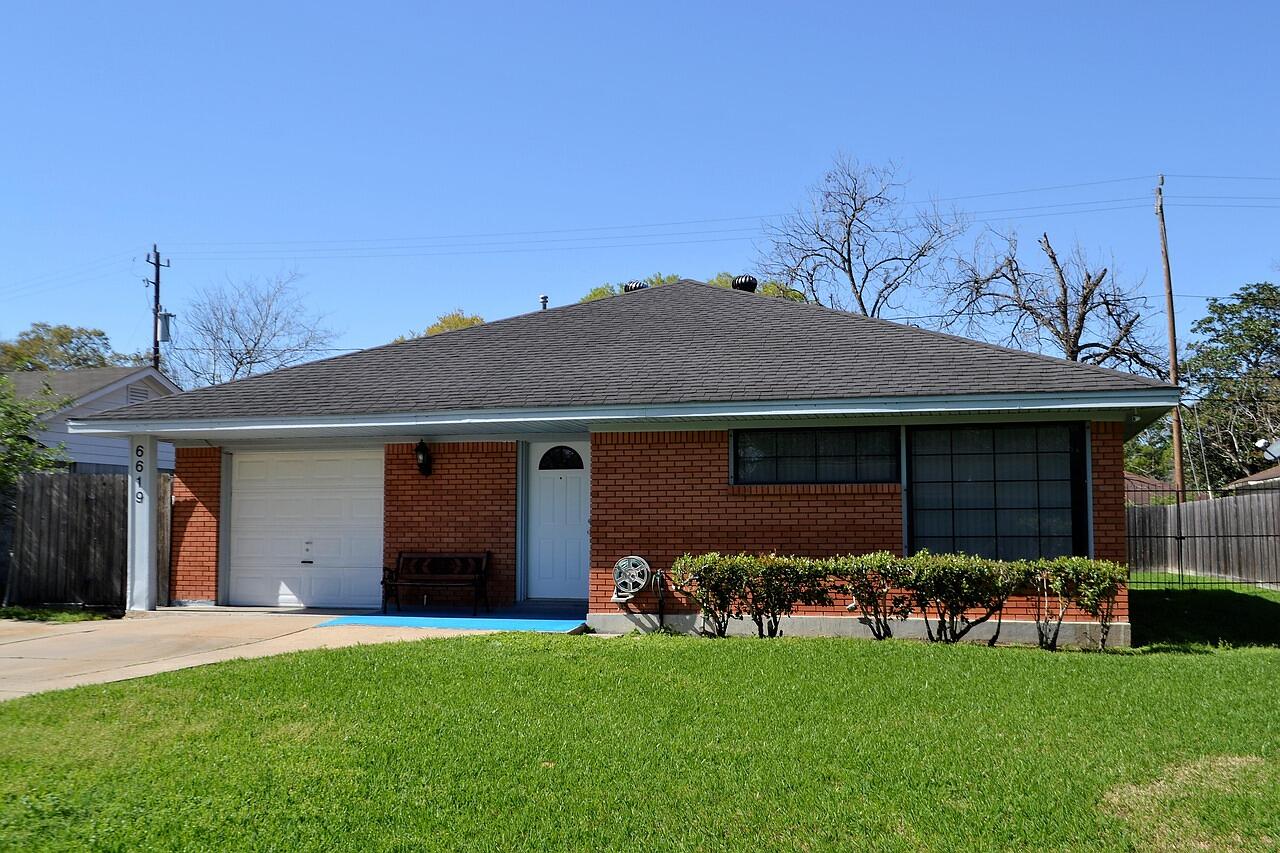
Mesquite is a city of brick ranch subdivisions built between the 1950s and the 1980s, with an older core and the Trinity bottoms on its western edge. Most jobs here are weep holes, garage doors and a sixty-year-old soffit.
- 1950s to 1980s brick ranch
- Trinity floodplain edge
- Free inspection, written quote
Free Inspection in Mesquite
The free inspection covers the roofline from a ladder, the attic from inside, the brick base course with the weep holes counted per elevation, the garage door bottom seal and jambs, and the utility penetrations. The droppings along an attic top plate are read for species and for how recent they are, every opening a quarter inch or wider is recorded with a location and a material, and the itemized quote that follows prices trapping, sealing and any attic work on separate lines.
Mesquite is roughly twelve miles east of downtown Dallas on I-30 or US 80, close enough to be covered on the same footing as the eastern Dallas neighborhoods. The line is answered at any hour, day or night, and inspection slots run 7am to 7pm seven days a week. Call, or send the details via the contact page and a dispatcher will ring you back.
Ranch-era brick, and components at the end of their service life
Mesquite grew through the 1950s, 1960s, 1970s and 1980s, which makes the typical house a brick ranch on a slab with parts that are now fifty or sixty years old.
Dallas-area construction moved off pier-and-beam around the mid 1960s, so all but the oldest core housing here is slab-on-grade. The standard building is brick veneer over wood frame, a low-pitched composition shingle roof over a vented attic of blown-in insulation, and a garage that is attached on the later houses and detached on some of the earlier ones. The opening list is short and predictable, and what makes it productive for rodents is age.
A garage door seal fitted in 1968 has worn to daylight at a corner. A soffit return panel has shrunk and lifted at least once. A gable vent screen has rusted through. A dryer or bathroom vent hood has lost its flap. The mortar at the gas line or hose bib penetration has cracked out. And along the base course, thirty or forty weep holes per elevation have been open since the wall went up, because they are designed openings for draining the cavity behind the brick.
Attics of this vintage usually carry a thin original layer of blown-in fiberglass, often below current recommendations before any rodent arrived, sometimes with a later radiant barrier added because of the summer heat.
The Trinity bottoms and the interstate corridors
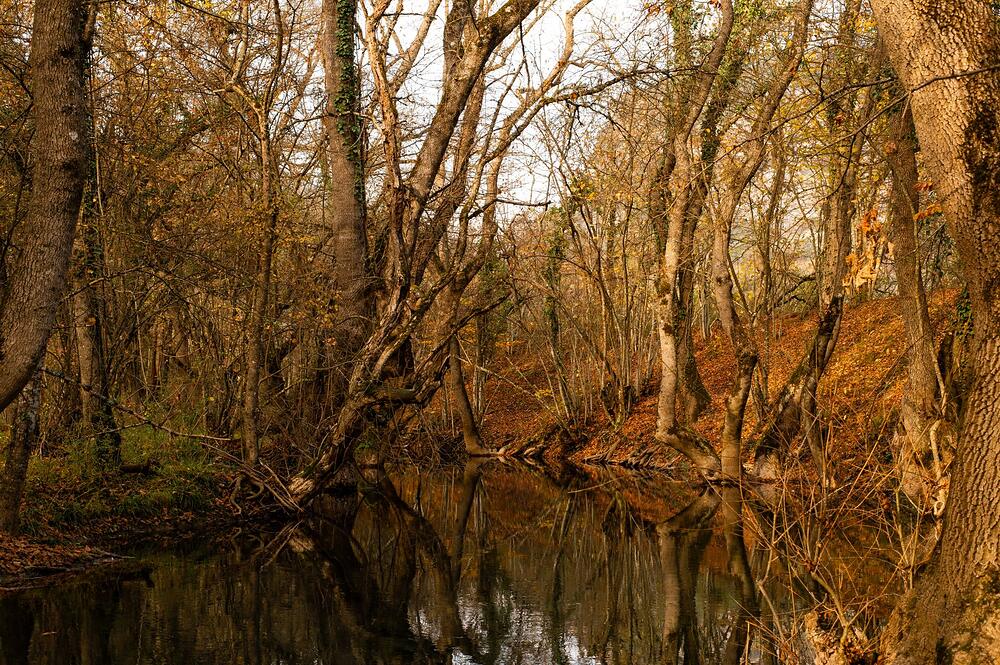
Mesquite has the Trinity River floodplain along its western side and two interstate corridors across it, and both carry rodent pressure of different kinds.
The bottoms are wooded floodplain with brush, standing water and soft ground, which is a permanent reservoir for ground-dwelling Norway rats and house mice. Those animals stay low and enter buildings under garage doors and through broken weep holes, and the creek corridors running east from the floodplain extend that reach into residential streets.
The corridors are a commercial matter. Warehousing, distribution and food service along I-30 and US 80 put dock doors, dumpster enclosures, roll-up door guides and shared roof decks into the picture, and a burrow system behind an enclosure supplies every tenant on a row regardless of what happens inside them. That work is covered on commercial rodent control, which includes the device map and service log a health inspection expects.
For a house, the corridor and the floodplain both argue for finishing the ground-level list: the whole base course, the garage door, the penetrations, and brush and wood piles cleared back from the walls.
What We Handle in Mesquite
Six services cover nearly every Mesquite call, weighted toward sealing and attic restoration because of the age of the stock.
- Rodent exclusion: weep holes, garage door, penetrations and roofline closed to the quarter-inch standard.
- Roof rat removal: attic trapping where sixty-year-old trees now stand over a low ranch roof.
- Mouse removal: kitchen and garage trapping with the base course closed behind it.
- Attic insulation replacement: a shallow original layer vacuumed out by measured area and re-blown to a figure 1966 never asked for.
- Attic cleanup: droppings, nests and soaked insulation out, then the attic sanitized.
- Commercial rodent control: warehouses, restaurants and retail on the I-30 and US 80 corridors.
A Typical Mesquite Job
The situation: a 1966 brick ranch with a detached garage, three blocks from a creek that runs down to the Trinity bottoms. Droppings in the garage and under the kitchen sink, a faint running sound overhead in the evenings, and insulation in the attic that has not been touched since the house was built.
What gets done: the roofline check finds a soffit return lifted on the creek-side elevation with rub marks at the edge and a gable screen rusted away. Twenty-nine weep holes are open on that elevation, the hose bib penetration has cracked mortar, and the bathroom vent hood has lost its flap. The detached garage has a settled slab leaving an inch under the door. In the attic, droppings a quarter to half an inch long with pointed ends run along the top plate, and the shallow fiberglass is flattened across three runs. The gable screen, the weep holes, the penetration, the vent hood and the garage door base are closed, traps hold the soffit return run, and a hackberry limb is cut clear of the roof.
How it turns out: six catches in the first week, one at the second check, nothing at the third. The soffit return is rebuilt and backed with hardware cloth, the attic is quoted for a measured removal and a re-blow to a deeper figure than 1966 called for, and the closure list runs to thirty-four items across two buildings.
What This Costs in Mesquite
Mesquite quotes often carry an attic line as well as a sealing line, and the published bands below cover both.
| Line | Band | Source |
|---|---|---|
| Dallas-area rat work, typical job | $224 to $1,192, average around $693 | Angi's Dallas figures |
| Sealing the building | $500 to $2,500 | HomeGuide 2026 national |
| Insulation removal and replacement | $2.50 to $5.50 per square foot | HomeGuide 2026 national |
| Attic cleanup and decontamination | $600 to $2,500 | HomeGuide 2026 national |
| Follow-up visits | $50 to $150 each | Angi's Dallas figures |
On a single-story ranch the sealing tends to land in the lower half of its range, since the ladder work is short and the openings are few, with a detached garage adding its own line. The attic is what moves the total: on a fifty or sixty-year-old shallow layer, flattened runs leave little to recover, and the insulation line is priced by measured square footage rather than as a lump sum. Every band is a typical-job figure, confirmed at the free inspection.
Why mice keep coming back
A look at the openings that make it repeat.

Video: EASY WAY to Get Rid of Mice in Your House FOREVER, from Silver Cymbal.
Common Questions in Mesquite
What callers from Mesquite ask before booking.
An older house
Is a sixty-year-old house harder to seal?
It has more worn openings and the same short list. Dallas-area houses after the mid 1960s are slab-on-grade, so there is no crawl space to add, but a garage door seal, a soffit return panel, a gable screen and a vent hood flap are all components that have reached the end of their service life. The closures are hardware cloth at the vents, sheet metal under a roof return, carpentry plus mesh at a soffit return, a new bottom seal at the garage, and covers at the weep holes.
Does my thin old attic insulation need replacing?
The parts flattened into runs or soaked with urine do, and on a shallow original layer that is often most of the affected area. Flattened loose fill sits below its rated R-value and damp loose fill performs badly, both figures from the Department of Energy. Since the material is coming out anyway, blowing back to a deeper figure than the house was built with costs little more than matching what was there, and it is priced per measured square foot so you can see the area.
Outside the house
Does the creek or the river bottom explain it?
It explains where the animals come from rather than how they get in. The Trinity floodplain and the creeks running into it are wooded, brushy and wet, which supports a permanent ground population of Norway rats and house mice, and those animals stay low and enter under garage doors and through broken weep holes. The closure list is the usual one; the difference is that it needs to be finished, and that brush and wood piles against the walls are worth clearing.
I run a business on the US 80 corridor. Is that covered?
Yes, and it is a different scope. Warehouses, restaurants and retail on the interstate corridors need dock door seals, man door sweeps, roll-up guides, floor drains and roof curbs closed as a capital line, plus interior traps and monitors on a numbered map and a dated service log with corrective action notes. Dallas County Health and Human Services handles vector complaints and Dallas City Code chapters 40 and 27 put the rodent-proofing duty on the owner. Commercial rodent control covers it.
Still have a question? Call (214) 203-5726 and ask.
Nearby Areas We Serve
The same contractors cover the towns around Mesquite, and the service area runs across Dallas County and the rest of the metro.