Rodent Removal in Preston Hollow
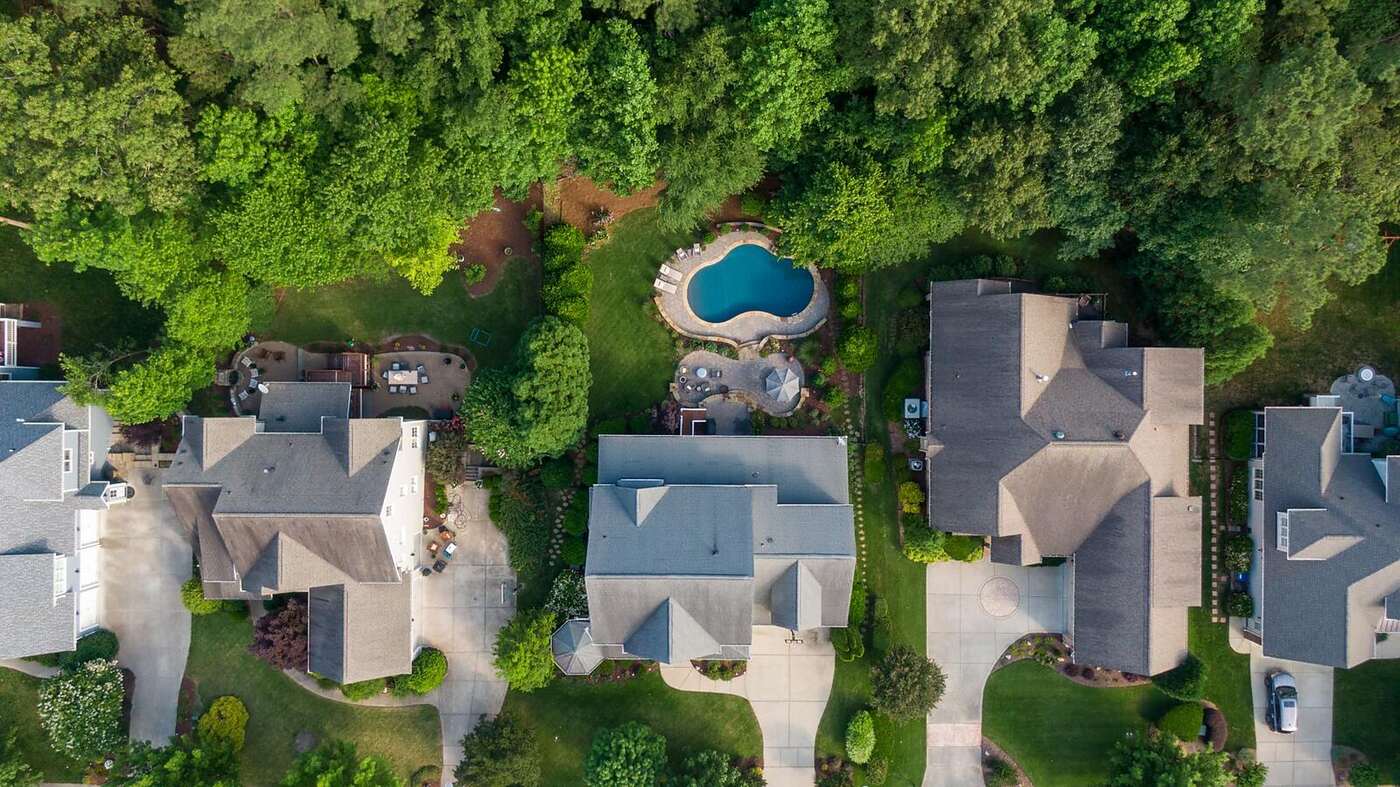
Preston Hollow is large wooded lots in north Dallas, where a 1950s ranch can sit next door to a recent rebuild and most properties carry more than one structure. The survey covers every building on the lot, outbuildings included.
- Large wooded lots
- Multiple structures per lot
- Creek corridor pressure
Ranch houses, rebuilds, and what sits between them
Preston Hollow has been redeveloping for decades, so the housing stock runs from original 1950s ranch houses to new construction on the same streets.
The original houses are single story, brick veneer, low-pitched roofs, set well back on deep lots, and built in the slab era since Dallas changed over from pier-and-beam around the mid 1960s. The rebuilds are larger, often two story, with more complex rooflines: multiple gables, dormers, roof returns where a lower roof meets a wall, and long runs of soffit. A complex roof has more junctions, and junctions are where builder gaps are left.
That gives two different inspections on the same street. On an original ranch the list is short: weep holes along the base course, the garage door seal, utility penetrations, soffit returns and vent screens. On a rebuild it is longer, because every dormer cheek, every roof return and every plane junction adds a candidate, and new construction commonly ships with unfinished soffit returns and unsealed stack penetrations that nobody revisits once the scaffolding comes down.
Renovation rather than rebuild is the third case, and it is the one that most often produces a surprise: a 1950s house with a 1990s addition and a 2015 kitchen has three generations of penetrations through the top plate and the slab edge.
Deep wooded lots and the structures on them
A Preston Hollow property usually has more than one building, and the rodents are often in the smaller one.
Guest quarters, pool houses, pool equipment enclosures, detached garages, workshops, sheds and generator housings are all common here, and every one of them has openings, most have stored material inside, and several have no regular human attention. An equipment enclosure with a louvered door and no screen behind it is an open building. A pool house closed up for six months of the year is a quiet nesting site a short distance from the main house.
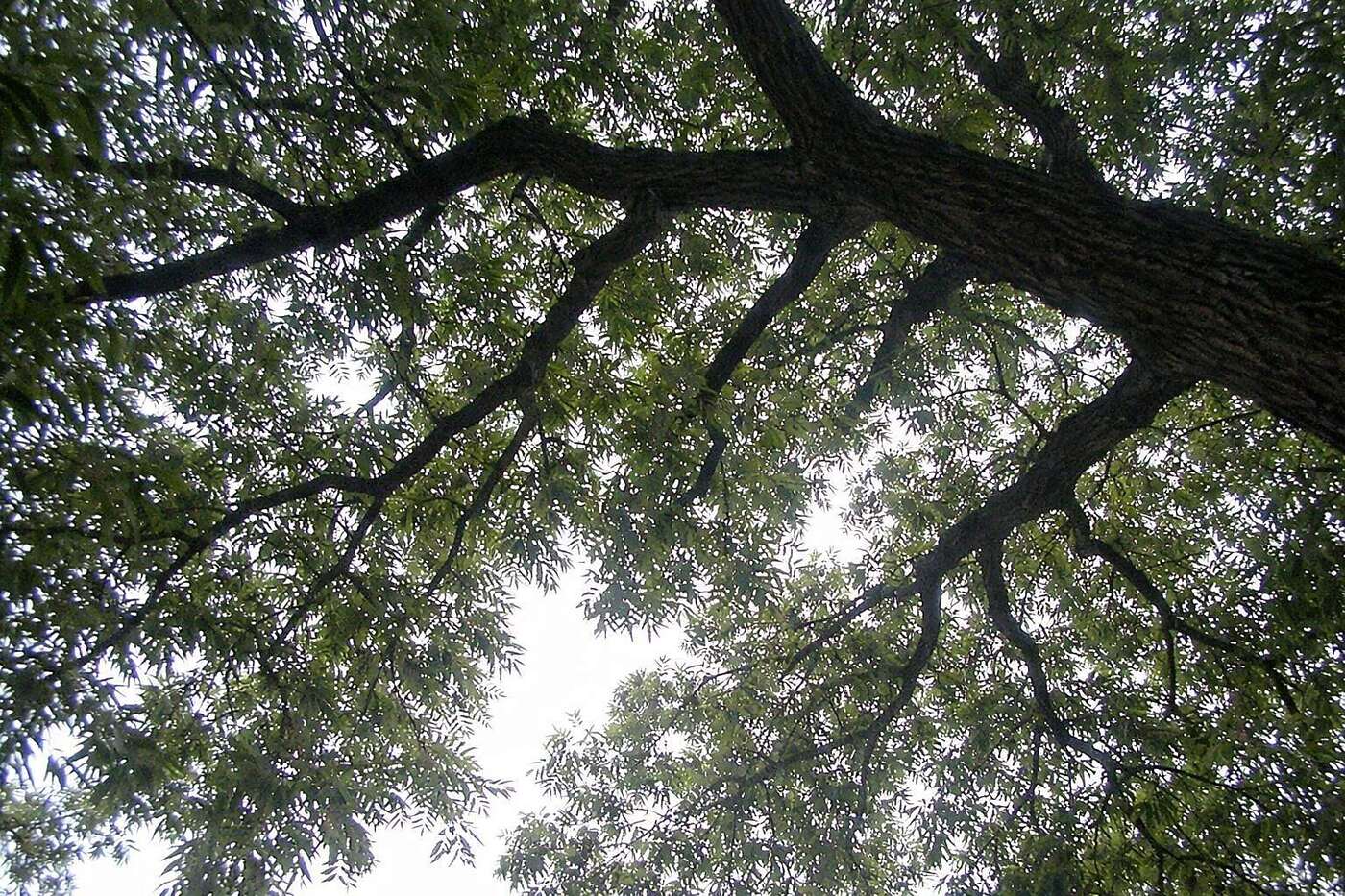
The canopy is the other factor. Preston Hollow lots carry live oaks, red oaks, pecans and cedar elms of considerable size, planted decades ago and now at or above roof height, and Bachman Branch and other creek corridors thread through the area with brush and water along them. UF/IFAS describes the roof rat as arboreal, traveling along limbs, wires and fences, with a range of about 150 yards from the den, which on lots this size can mean the den is on your own property rather than a neighbor's.
So the survey is a property survey. Each structure gets its own closure list, limb contact is recorded building by building, and stored feed, birdseed or pet food in an outbuilding is named as the attractant it is.
How the work runs on a Preston Hollow property
Survey every structure, then seal either side of the trapping across all of them at once.
The order matters on a multi-building lot, because sealing the main house while a pool house stays open moves the problem rather than ending it. The inspection covers each building's roofline from a ladder, its base course or skirting, its penetrations and its interior, then records which buildings show current activity by reading droppings for freshness and looking for rub marks at the openings. Roof rat droppings run a quarter to half an inch long with pointed ends per UF/IFAS.
The closures then go in one program: quiet openings across every structure first, snap traps on the live runs, which on these lots are frequently in an outbuilding rather than the house, and the last openings closed once two consecutive checks come up empty. Quarter inch is the standard each closure is measured against. On a rebuild with a complex roof the ladder work is the bulk of the labor, and on an original ranch the weep hole count is.
Limb clearance off every roof plane comes in the same program, along with recommendations on ivy, wood piles and stored feed. The scopes are described on rodent exclusion and roof rat removal.
New construction and the openings it arrives with
A newly built house is not a sealed house, and on these streets that is a recurring surprise.
Rebuilds commonly ship with soffit returns that were boxed but never closed behind, plumbing stacks through the decking with no collar, gaps where two roof planes meet at different heights, unscreened or loosely screened ridge and gable vents, and a garage door with a seal that fits the opening rather than the slab. None of those is a defect a buyer would notice, and none of them gets revisited after handover.
Expansive clay then does its part. The soil under north Dallas swells and shrinks through the year and moves foundations regardless of age, opening gaps at slab edges and utility penetrations on a three-year-old house as readily as on a sixty-year-old one, which is why the sealing window local firms name is late August through September, after a summer of movement.
The practical point for an owner of a recent build is that the first rodent call is usually not a maintenance failure. It is the original construction being found by an animal, and the fix is the same closure list with carpentry and metal rather than a warranty claim.
A representative closure on a Preston Hollow outbuilding
The closure most often needed on these lots is at a pool equipment enclosure or a pool house soffit.
An equipment enclosure is typically a small framed structure with a louvered door or side panel for airflow, and the louver is almost never screened behind, which makes the whole building open at an opening far wider than the half inch a rat needs. A pool house closed up for half the year adds an unscreened soffit vent and a door with a gap at the threshold. The closures are quarter-inch galvanized hardware cloth fixed behind the louver so the airflow is preserved, mesh behind the soffit vent, and a threshold seal at the door. These are small pieces of work, and on a multi-structure lot they are frequently the ones that decide whether the main house stays quiet.
A common Preston Hollow call
The situation: a 1950s ranch on an acre, extended in the 1990s, with a detached garage, a pool house and an equipment enclosure behind it. Noise overhead in the back bedroom after dark, and the pool service reporting droppings in the equipment enclosure.
What gets done: the survey starts at the enclosure, where the louvered side panel has no screen behind it and there is a nest in the insulation around the heater. The pool house has an unscreened soffit vent and a gap at the door threshold. On the main house, a roof return above the 1990s addition is open underneath where the lower roof meets the wall, twenty-two weep holes are uncovered along the east elevation, and a cedar elm limb lies across the addition's roof plane. Droppings along the top plate in the attic on that side are dark and soft. The enclosure louver and the pool house vent and threshold are closed first, along with the weep holes, the roof return is left open with snap traps on the run beside it, and the limb is cut back.
How it turns out: five catches across the enclosure and the attic in the first week and nothing in the second. The roof return is closed with sheet metal, the nest in the enclosure insulation is removed as a separate line, and the closure list covers three buildings with materials against each opening.
Preston Hollow rodent questions
What callers on these lots ask before booking.
The property
Do the pool house and the equipment enclosure need doing too?
On a lot like this they usually need doing first, because that is where the animals are living. An equipment enclosure has a louvered door or panel for airflow that is almost never screened behind, and a pool house shut up for half the year is quiet cover a short distance from the main house. The closures are small: quarter-inch galvanized hardware cloth behind the louver so the airflow is kept, mesh behind the soffit vent, a threshold seal at the door. Each structure is itemized separately on the quote.
My house was rebuilt five years ago. Why is this happening?
Because new construction is rarely sealed against rodents. Rebuilds commonly arrive with soffit returns boxed but open behind, plumbing stacks through the decking with no collar, gaps where two roof planes meet at different heights, and a garage door seal that fits the opening rather than the settled slab. Expansive clay then moves the structure regardless of age and opens gaps at slab edges and penetrations. The fix is the same closure list of carpentry and metal rather than a builder warranty claim.
The trees and the timing
Do I have to cut back trees on a lot this size?
Only the limbs that touch or nearly touch a roof plane, and on several structures that may be several cuts. UF/IFAS describes the roof rat as arboreal, moving along limbs, wires and fences, and ranging about 150 yards from its den, which on an acre lot with mature oaks and pecans means the den can be on your own property. The clearance is a cut off the roof plane with a clear gap, plus checks on fence lines, garden walls with heavy ivy and cable runs to the fascia.
When should a property like this be sealed?
Late August through September, which is the window local firms name. A hot north Texas summer dries the expansive clay, moves the structures and opens gaps at slab edges, weep holes and penetrations, so that is when the full opening list is visible and when a survey across several buildings is most productive. The first cool fronts in late September or October are what push the animals indoors, and activity peaks November through February. A winter call still gets done; it starts with trapping instead.
Still have a question? Call (214) 203-5726 and ask.
The route in from the sewer line
How a rat travels a drain into a house.

Video: How do rats get out of the sewers and into your home?, from BEEKIND Pest Control.
Why Preston Hollow homeowners book through us
Three things that matter on a large lot with several buildings.
A closure list per building
A Preston Hollow property commonly carries guest quarters, a pool house, an equipment enclosure, a detached garage and a shed, and the current activity is frequently in the one nobody visits. Sealing the main house alone moves the problem rather than ending it, so the survey covers each building and the quote itemizes them separately. An unscreened louver on an equipment enclosure is an opening far wider than the half inch a rat needs or the quarter inch UF/IFAS sets as the rat-proofing standard.
A quarter inch is the rat-proofing standard, UF/IFAS Extension
Rebuild rooflines, junction by junction
A two-story rebuild has multiple gables, dormer cheeks, roof returns where a lower roof meets a wall, long soffit runs and several plane junctions, and new construction regularly arrives with returns boxed but unsealed behind and plumbing stacks with no collar. Each junction is a candidate, so the roofline is walked from a ladder rather than assessed from the ground, and the count of openings goes on the quote as individual items with a material against each.
Dallas: almost all construction after 1970 is slab-on-grade, roofline work is the main scope
The den may be on your own lot
UF/IFAS describes the roof rat as arboreal, traveling along limbs, wires and fences, and ranging about 150 yards from the den. On a property measured in acres with mature live oaks, pecans and cedar elms and a creek corridor such as Bachman Branch nearby, that radius sits inside the boundary line, so ivy on a garden wall, a wood pile and a heavy limb over a pool house are part of the problem. Those get recorded and cleared alongside the closures.
Roof rats range about 150 yards from the den, UF/IFAS Extension