
Roof Rat Removal in Dallas, TX
The roof rat is the animal behind nearly every rat-in-the-attic call in Dallas, and it arrives along a tree limb rather than across the yard. Contractors trap the attic out and close the roofline behind them, with a TDA license where the work calls for one.
- Attic trapping and sealing
- Free roofline inspection
- Itemized written quote
What a roof rat job includes
A roof rat job covers four pieces of work, and a quote that leaves one out is a quote for part of the problem.
- The walk: roofline, attic, brick base course, garage and any crawl space, with every opening a quarter inch or wider written down and photographed.
- The sealing: hardware cloth at vents and soffit returns, sheet metal at roof returns, metal collars at plumbing stacks, and covers on the weep holes that keep the brick draining.
- The trapping: snap traps set on the active runs along the top plate and the joist bays, checked and reset until the runs go quiet.
- The close-out: the last openings sealed after the activity stops, limbs cut back off the roof, and a written list of what was closed and with what.
Attic cleanup and insulation are separate lines, priced on what the inspection finds rather than folded into the removal figure. Attic cleanup handles droppings, nests and soaked insulation; rodent exclusion is the sealing scope written up on its own when the animals are already gone.

Work out roughly what this job costs in Dallas
Six questions, priced from the Angi Dallas figures and the HomeGuide 2026 national bands further down the page. The spread is wide on purpose: the number of openings and the foundation type decide most of it, and neither can be counted from a form.
Bands come from Angi's Dallas rat exterminator page and HomeGuide's 2026 national guides. Every figure is confirmed at the free inspection.
Signs it is roof rats and not something else
Noise overhead after dark is the single strongest tell in Dallas.
Roof rats move at night, and what you hear is running and dragging across the ceiling rather than the heavier, slower thumps of a possum or the daytime scrabble of a squirrel. The droppings settle it: UF/IFAS Extension describes roof rat droppings as a quarter to half an inch long with pointed ends, usually in lines along a joist or the top plate where the animals travel. Rub marks show up as dark greasy smears on rafters and at the lip of an opening, because the same route gets used hundreds of times.
Outside, look up. A limb resting on the shingles, a fence line running to the eave, or a cable crossing to the fascia is the road in. UF/IFAS puts the roof rat's range at about 150 yards from its den, which means the animals in your attic may well be denning two or three lots away and commuting. Gnawed pecans or citrus skins dropped on a flat roof or in a gutter are another marker, since the roof rat is a better climber and a keener fruit eater than the Norway rat.
Inside the house, chewed wiring in the attic is the finding that moves a job up the list. UF/IFAS notes that rats chew wiring and can potentially start fires, which is reason enough to get a light up into the attic before the winter runs its course.
Where roof rats get onto a Dallas roof and into the attic
Almost every entry sits within a few feet of the eave or the ridge.
Dallas houses are brick veneer over wood frame with composition shingles over a vented attic, and that construction leaves a predictable set of openings. The soffit return, the boxed corner where the soffit meets the gable wall, is the most common by a wide margin, because builders close it with a panel that shrinks and lifts. Gable and ridge vents come next: a louvered gable vent with a rusted or missing screen is an open door, and a ridge vent lifted by a hailstorm leaves a gap the full length of the roof. Then the roof return, the short horizontal shelf where a lower roof meets a wall, which is often left unflashed underneath. Plumbing stacks through the decking, builder gaps where two roof planes meet at different heights, and gaps behind fascia board finish the list.
A half inch is all a roof rat needs, and a quarter inch is the standard every seal is measured against per UF/IFAS. That gap between the two figures is why a homeowner patching what looks like a small hole often finds the animals back in a week.
Trapping only, sealing only, or both
The two halves of the work fail on their own and hold together, which is what the comparison below shows.
| Approach | What happens | Where it is used |
|---|---|---|
| Trapping with nothing sealed | Catches animals for as long as the traps stay out. New rats arrive along the same limb within days, so the catch count never falls to zero. | Reasonable only as a holding measure while sealing is scheduled. |
| Sealing with animals still inside | Shuts live rats into the attic and the wall cavities. Chewing out through a soffit panel or dying in place is the usual result. | Appropriate once trapping has stopped producing catches. |
| Bait alone | Kills the animals wherever they are nesting. The EPA describes most rodenticides as anticoagulants with death coming four days to two weeks after feeding begins. | Outdoor stations on some commercial sites, by a TDA-licensed contractor. |
| Sealed in sequence, then trapped | Unused openings closed first, traps set on the live runs, last openings closed once the attic is quiet. | The standard sequence on a residential roof rat job here. |
How long does a roof rat job take from the first call?
Two to three days of trapping clears a handful of animals, and a heavy attic can run one to two months, on HomeGuide's 2026 timelines.
The spread is decided by whether the building was closed, rather than by the quality of the trapping. UF/IFAS notes that roof rats are wary of new objects, so traps need to sit for at least a week before their catch rate means anything; an operator who pulls them after two days has measured nothing. Past that, the number that decides the calendar is how many openings stayed open. With the roofline closed, the population in the attic is finite and the catch curve falls to nothing. With one soffit return still lifted, the curve flattens out and never reaches zero, because the supply is coming from the canopy.
On a typical Dallas house the realistic shape is a free inspection, sealing and trap set within the first visits, a trap check a week later, and a close-out visit once two consecutive checks come up empty. The long stories, the ones where somebody has had a company coming back since October, are almost always trap-only plans.
Do I really need the chew-ins repaired now, or can I just trap?
The repairs are what end the job, so they are the part to keep if something has to be cut.
A chewed soffit return or an enlarged gable vent opening is a marked route. Rub marks and urine make it scent-positive, and roof rats follow established routes rather than exploring fresh ones, so an unrepaired opening is the entry the next animal uses. Trapping without the repair means paying for visits that keep producing catches, which reads like progress and amounts to a subscription.
There is a reasonable middle. If the budget only covers part of the sealing this month, the sensible order is the roofline first, because that is where roof rats arrive, and the base of the house second. The inspection can price the scope in stages and the quote can show them as separate lines so you can choose. What does not work is deferring all of it and keeping the traps, which is the pattern homeowners online describe as harvesting rodents.
Limb clearance belongs in the same conversation. Cutting branches back off the shingles removes the bridge, and on a street of mature red oaks and pecans it is often the cheapest line on the whole quote.
What roof rat removal costs in Dallas
Published figures put a typical Dallas rat job between a few hundred dollars and a little over a thousand, with the sealing scope deciding most of it.
| Line item | Published band | Source |
|---|---|---|
| Rat exterminator work, typical Dallas job | $224 to $1,192, averaging about $693 | Angi's Dallas figures |
| Inspection fee where one is charged | $100 to $200 (free here) | Angi's Dallas figures |
| Follow-up visit | $50 to $150 | Angi's Dallas figures |
| Trapping and removal | $250 to $1,200 | HomeGuide 2026 national |
| Full-home exclusion sealing | $500 to $2,500 | HomeGuide 2026 national |
| Attic cleanup and decontamination | $600 to $2,500 | HomeGuide 2026 national |
What moves a quote inside those bands is the count of openings, the height and pitch of the roof, how long the activity has run, and whether the attic needs cleanup afterward. A single-story ranch with three soffit returns to close is a different job from a two-story with a steep roof, two gable vents and a lifted ridge. Every one of these figures is a typical-job band, and the free inspection is what turns it into a number with your address on it.
The estimator above runs the same arithmetic on six answers. Treat it as a budgeting range.
Why Dallas produces so many roof rat calls
Mature tree canopy over decades-old rooflines is the whole explanation.
A local operator guide and the Dallas branch page of a large regional company both state that roof rats and Norway rats account for nearly all rodent infestations in North Texas homes, and both name the roof rat as the attic animal. The neighborhoods that produce the calls are the ones with the oldest and heaviest canopy: Lakewood, the M Streets, Casa Linda, Kessler Park, Old East Dallas, and across the line into Richardson. Red oaks, live oaks, pecans and cedar elms planted eighty or ninety years ago now rest on rooflines that were last re-soffited in the 1990s.
The calendar matters as much as the canopy. Mild winters let rodents breed through most of the year here, and the call volume turns with the first cool fronts in late September or October before peaking from November through February. Read in reverse, the sealing window local firms name is late August through September, after a summer of expansive clay soil movement has opened gaps at slab edges, weep holes and utility penetrations and before the animals start looking for somewhere warm. A house closed in September is a house that stays quiet in January.
Foundation era splits the job in two. Homes built before roughly 1965 are mostly pier-and-beam with a crawl space, and on those the inspection walks the skirting and the foundation vents as well as the eave. Almost everything after 1970 is slab-on-grade, where the ground-level route is the weep holes and the garage door seal. Both kinds share the roofline, which is where a roof rat starts. Crawl space rodent control covers the underside on the older houses.
What to ask the contractor before the work starts
Five questions separate a scoped job from a loose one.
- What is included and what is a separate line? Trapping, sealing, cleanup and any follow-ups should each show a figure.
- How many follow-up visits are in the price? Angi's Dallas figures put extra visits at $50 to $150, so it matters whether yours are counted.
- What materials close the openings? Hardware cloth, sheet metal and weep hole covers hold. Expanding foam on its own is chewed through.
- Is bait part of the plan? If it is, the contractor needs a TDA license and you can ask for the TPCL number.
- What happens if they come back? Get the answer before signing rather than after.
On the license question, Texas regulates structural pest control through the Texas Department of Agriculture, and rodents sit expressly inside that scope. Any contractor placing rodent bait for hire must work under a licensed business with a TPCL number. Trap-and-seal work done without a pesticide is exempt under Texas Occupations Code section 1951.058, which covers live trapping and nonpesticidal barriers, so a skilled exclusion specialist may lawfully hold no license at all. The contractors we route hold a TDA license where the work requires one. Ask for the number where bait is quoted, check it on the TDA license search, and ask for proof of insurance either way.
How the call is handled and who gets dispatched is set out on the about page, and the hours and address are on the contact page.
Services that usually run alongside this one
A Dallas rodent job is a sequence of separate lines on one quote, and these are the pages for the steps around this one.
- Rodent Exclusion: Closing the roofline, the weep holes and the garage door to the quarter-inch standard.
- Attic Cleanup and Decontamination: Vacuuming out the droppings and nests, bagging the soaked loose fill, then treating the deck.
- Crawl Space Rodent Control: Skirting, vent screens and access doors on the pier-and-beam homes built before 1965.
The order these steps run in is set out on the about page, and a dispatcher will talk it through on the phone at whatever hour you call.
Rat or mouse
Size, droppings and behavior tell them apart.
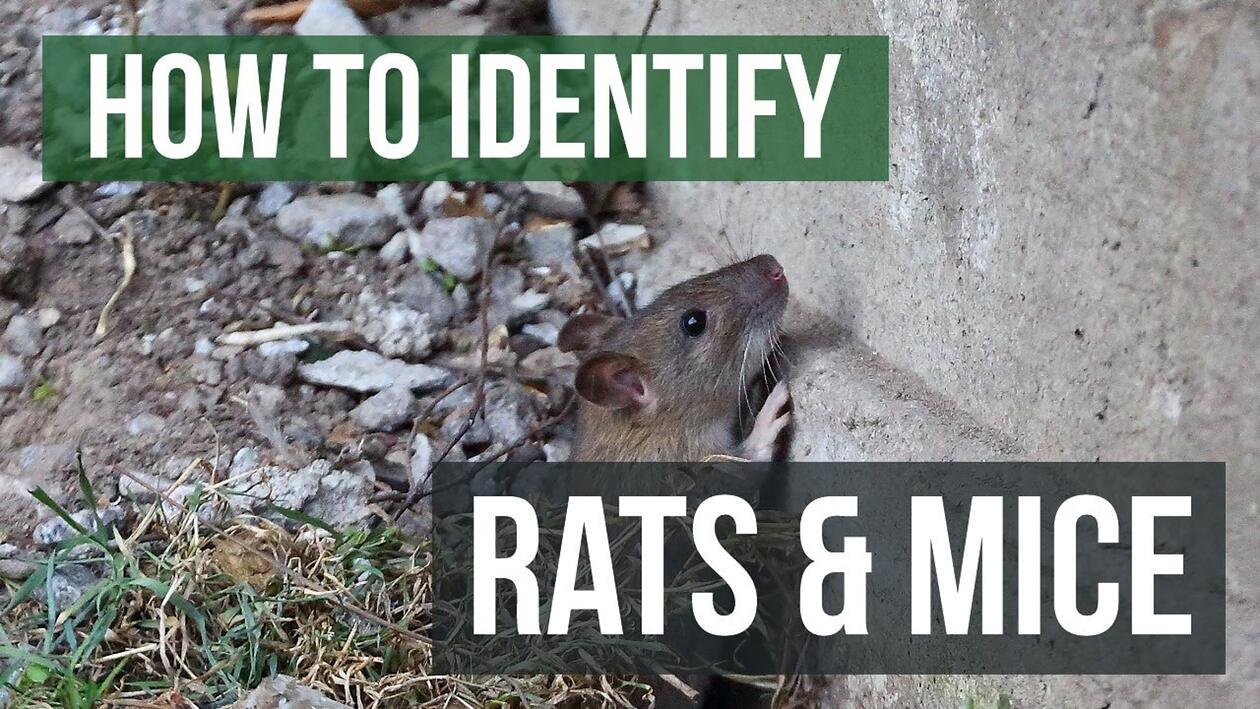
Video: The Differences Between Rats and Mice, from Solutions Pest & Lawn.
How a roof rat job runs in Dallas
Five steps, with the sealing split either side of the trapping so nothing is closed in and nothing is left open.
-
Describe the noise
Where in the house, what time of night, how long it has run, and roughly when the house was built. That narrows the species and the foundation before anyone drives out.
-
Free roofline inspection
Eave, vents, roof returns and attic walked with a light, droppings identified, every opening recorded and photographed, and an itemized quote written from it.
-
Close the quiet openings
Hardware cloth, sheet metal and vent screens go on everything with no current traffic, so the animals inside are left one or two known routes.
-
Trap the active runs
Snap traps along the top plate and joist bays, left at least a week because roof rats avoid new objects, then checked and reset on a schedule.
-
Seal the last runs
Once two checks come up empty the remaining openings are closed, limbs are cut back off the roof, and the sealed list is handed over in writing.
Why Dallas homeowners route roof rat work through us
Three things decide whether an attic goes quiet and stays quiet.
Closed to a quarter inch
A roof rat needs about half an inch and every seal here is checked against a quarter inch, the rat-proofing standard UF/IFAS Extension publishes. That means hardware cloth behind a gable louver rather than over it, sheet metal under a roof return, a metal collar at the plumbing stack, and a soffit return rebuilt rather than foamed. The list of what was closed and with what is written down, so a future owner or a buyer's inspector can read it.
A quarter inch is the rat-proofing standard, UF/IFAS Extension
Traps stay out a full week
UF/IFAS notes that roof rats are wary of new objects, which is why a trap line needs at least a week before the catch rate tells you anything. Contractors here leave them that long and keep checking rather than declaring the attic clear on day three. The close-out comes after two consecutive empty checks, and HomeGuide's 2026 timeline of two to three days for a light infestation and one to two months for a heavy one is what gets quoted rather than a promise.
HomeGuide 2026: two to three days light, one to two months heavy
The canopy gets dealt with too
Trapping an attic under a red oak resting on the shingles is work that repeats. UF/IFAS puts the roof rat's range at about 150 yards from its den, so the animals arriving on your roof may be living three lots away and using your limb as the last step. Limb clearance off the roof plane, fence-line checks and cable entry points are part of the scope on the tree-canopy streets of Lakewood, the M Streets, Casa Linda and Kessler Park.
Roof rats range about 150 yards from the den, UF/IFAS Extension
What Reddit Says About Roof Rats in the Attic
Homeowner threads on rats in the attic are unusually consistent about what went wrong, and the pattern is almost always the same: the animals were trapped and the building was left open.
The phrase that comes up again and again is that trapping without sealing amounts to harvesting rodents. People describe companies that returned every two weeks for four or five months, emptied traps, collected a fee and never touched a soffit. The advice that follows is always to ask, before signing, whether the company performs the repair work itself or only sets traps, because a pest control firm that subcontracts or declines the carpentry leaves the part that ends the job undone. The second recurring complaint is the monthly monitoring contract folded into a removal quote, so the homeowner cannot see what the removal itself cost and cannot cancel without losing the warranty.
Bait comes up constantly, usually as a regret. The belief that poison makes a rat thirsty so it goes outside to die gets corrected in every thread where it appears, and the people correcting it are generally describing a smell in a wall they are now paying someone else to find. Inspection fees are the other friction point: several posters mention paying around seventy five dollars just to get a bid, and comparing bids is hard when each one describes a different scope.
The questions people say they wish they had asked are short. What exactly is included and what is a separate line. Is the sealing warrantied, and does the warranty renew. Will you clean and decontaminate or only trap. How many follow-up visits are in the price. What happens if they come back.
The register in these threads is heavier than the subject suggests. People write about lying awake listening to running above the ceiling, about feeling the house has been taken from them, about being told by friends that they are overreacting. That part is real and the sleep loss is the reason most calls happen at night. The contractors we route work the sealing into the sequence, price trapping and sealing and cleanup as separate lines, and the phone is answered at whatever hour the scratching starts.
A typical roof rat job on a pier-and-beam house in East Dallas
The situation: a 1930s brick-and-frame house on pier-and-beam, with a red oak whose lower limbs rest on the back slope of the roof. Running and dragging above the back bedroom every night since the first cool front, loud enough that the owner has moved to the front of the house to sleep.
What gets done: the inspection follows the limb to a lifted soffit return on the back corner and finds droppings a quarter to half an inch long with pointed ends in a line along the top plate, plus greasy rub marks at the return. A rusted gable screen on the same elevation is the second opening. The screen and three quiet openings are closed with hardware cloth, the return is left open with snap traps set on the run beside it, and the limb is cut back clear of the roof plane. The crawl space is checked from underneath for a separate ground-level route and the skirting is found sound.
How it turns out: the trap line produces catches in the first week and nothing in the second. The return is rebuilt and sealed on the close-out visit, the attic insulation is inspected and found compressed only along the run so cleanup is quoted as its own line, and the owner gets a written list of the five closures and the materials used.
Roof rat questions from Dallas homeowners
What comes up on nearly every attic call here.
The animal
How do I know it is a roof rat and not a squirrel?
Time of day separates them more reliably than anything else. Squirrels are active in daylight, heaviest at first light and again toward dusk, and they sound heavier and more deliberate. Roof rats run after dark and the noise is quicker and lighter, often with a dragging sound as nesting material moves. Droppings confirm it: UF/IFAS describes roof rat droppings as a quarter to half an inch with pointed ends, while squirrel droppings are blunter and more scattered. The entry points overlap, so a sealed roofline solves both, but the trapping differs and the dispatcher needs to know which you are hearing.
Is it safe to seal the roofline before the rats are trapped?
Partly, and the order is what makes it safe. The openings with no current traffic get closed first, which shrinks the house down to one or two known routes and makes the trapping efficient. The runs that are in use stay open until the trap line stops producing. Closing everything at once with animals inside leaves them chewing out through a soffit panel or dying in a wall cavity, which turns a trapping job into a dead rodent removal job. The sequence exists to avoid exactly that.
Will they come back after the attic is sealed?
Not through a closure that was done properly, and that is the test to apply to a quote. Rats follow established routes, so a sealed and scent-stripped opening stops being attractive. What brings them back is a missed opening, a new one, or a limb that grows back onto the roof. Hailstorms lift ridge vents here and clay soil movement opens gaps at penetrations, so a roof worth checking once is worth checking again in a few years. Ask whoever attends what their sealing warranty covers and whether it renews.
Cost, timing and who attends
What is the cheapest way to get rid of roof rats?
Sealing the roofline and trapping once, done together, is the cheapest route that reaches an end. Angi's Dallas figures put a typical rat job at $224 to $1,192 with an average near $693, and HomeGuide's 2026 national guide puts full-home exclusion at $500 to $2,500. A bait-only plan looks cheaper on the first invoice and regularly produces a carcass in a wall plus the visit to find it, which is where the saving goes. Doing the limb clearance yourself is a genuine way to cut the bill.
Do the contractors hold a license?
Where the work requires one, yes, and the answer depends on the method. Texas regulates structural pest control through the Texas Department of Agriculture, and anyone placing rodent bait for hire must work under a licensed business with a TPCL number. Live trapping and nonpesticidal barrier work are exempt under Texas Occupations Code section 1951.058, so a trap-and-seal contractor may lawfully carry no license. Ask for the TPCL number if bait is in your quote, check it on the TDA license search, and ask for insurance documentation whatever the plan.
Does the insulation have to come out afterward?
Only where it is compressed into travel runs or soaked. Insulation crushed flat stops performing at its rated R-value and insulation that has taken moisture performs badly, both per the Department of Energy, and those are the two things the inspector is checking for. A light infestation often leaves the insulation serviceable with spot cleanup; a season of heavy use usually does not. Attic cleanup and insulation replacement are quoted as separate lines so you can see which one you are paying for.
Still have a question? Call (214) 203-5726 and ask.