Rodent Removal in Kessler Park
Kessler Park was laid out in the 1920s across hilly wooded ground above Coombs Creek, which gives it terraced lots, tall trees at roof height and pier-and-beam houses stepped into the slope. The inspection follows the terrain.
- 1920s Tudor and Prairie
- Terraced hillside lots
- Creek corridor pressure
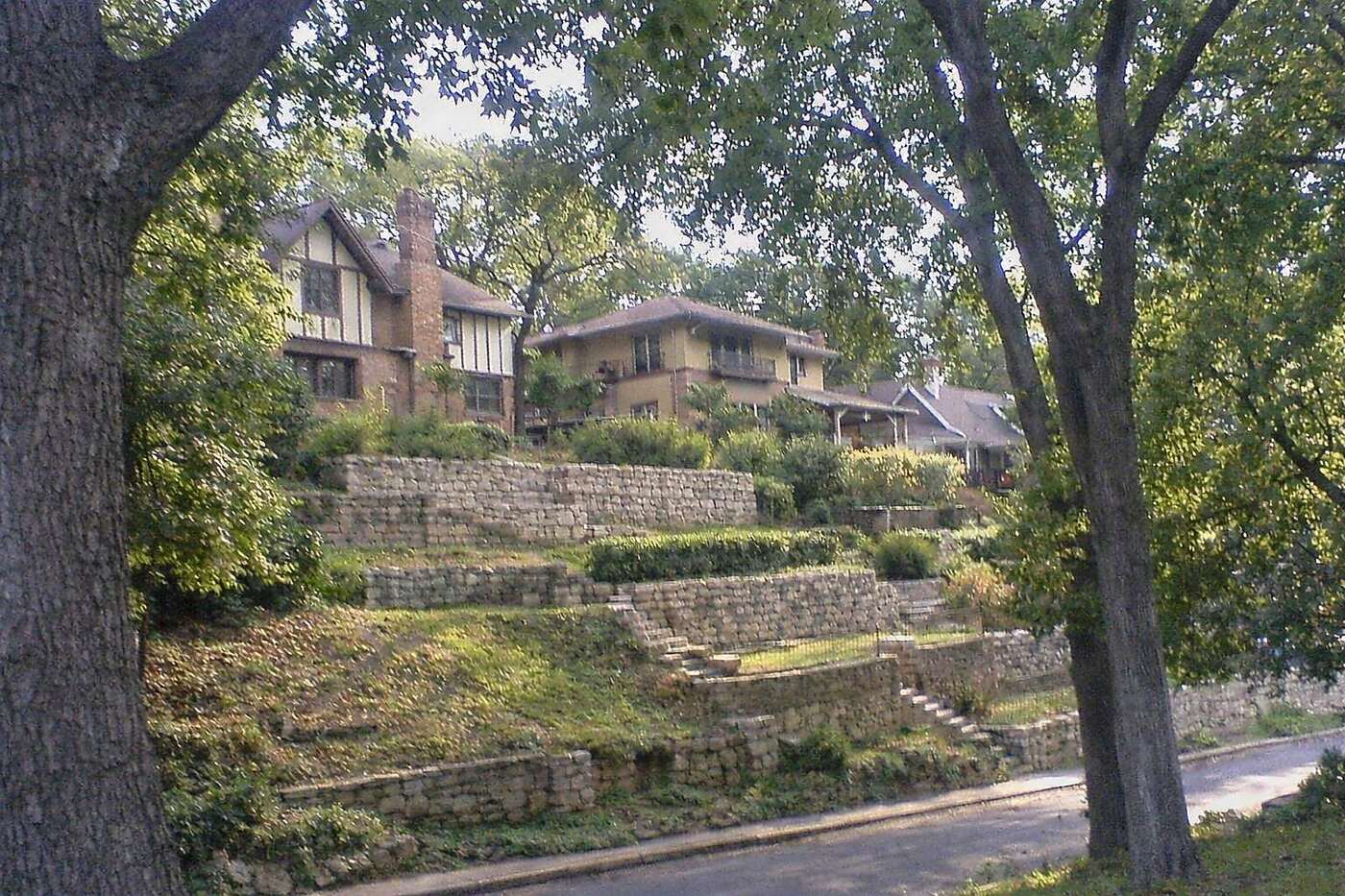
1920s houses stepped into a hillside
Kessler Park's streets follow the contours rather than a grid, and the houses were built to sit on a slope.
The neighborhood was laid out in the 1920s in North Oak Cliff, with Tudor, Prairie and Mediterranean houses on terraced lots, retaining walls, stone steps and long driveways cut into the hill. Dallas houses built before roughly 1965 are mostly pier-and-beam with a crawl space, so almost everything original here sits on piers, and on a sloping lot that crawl space is shallow on the uphill side and deep on the downhill side. On the deep side the skirting can be a full masonry wall with a door in it; on the shallow side the headroom may be a foot or less.
The terrain has two consequences for the work. First, the uphill elevation is where soil bears against the structure, and expansive clay moving through a dry summer pulls away from skirting and retaining walls there, opening gaps that were sound in spring. Second, the downhill side is where the access is, which means the part of the crawl space that is easiest to inspect is usually not the part with the problem.
Retaining walls deserve a line of their own. Dry-laid or mortared stone walls on these lots are excellent rodent harborage, and they frequently sit within a yard of the house.
Coombs Creek and the wooded corridor
Coombs Creek runs through the neighborhood and carries a permanent population along it.
A creek corridor gives rodents water, cover, a travel route and banks to burrow into, none of which depends on a building. Norway rats stay close to the ground and work brush, banks and burrow systems, and they reach houses under garage doors, through broken weep holes and into crawl spaces. Roof rats use the tree cover along the same corridor and then move up: UF/IFAS describes the animal as arboreal, traveling along limbs, wires and fences, with a range of about 150 yards from the den.
On a terraced lot the two species arrive at different parts of the house. The ground population comes at the downhill skirting, the retaining wall junctions and the garage; the canopy population comes at the eave on the uphill side, where the slope brings the ground closer to the roofline and a limb can reach it easily.
So the closure list here is long and it is shaped by the contour. The creek side of a property is checked for brush against the structure, wood piles, ivy on masonry and anything that bridges the gap between the corridor and the building.
How the work runs on a Kessler Park house
Uphill and downhill get walked separately, then the sealing splits either side of the trapping.
The inspection starts at the downhill access because that is how you get under the house, then covers the shallow uphill side as far as the headroom allows, noting where the soil bears on the skirting. The roofline is walked from a ladder on both elevations, which on a hillside lot means the uphill eave is within reach of the ground and the downhill eave needs the full ladder. The attic reading is the usual one: droppings along the top plate, a quarter to half an inch with pointed ends for roof rats per UF/IFAS, read for freshness.
Closures go in the standard order, quiet openings first, traps on the live runs for at least a week because roof rats are wary of new objects, last openings closed once two consecutive checks come up empty. Stone and masonry work on these houses calls for mortar with embedded metal rather than foam, and the retaining wall junctions get metal where a gap has opened behind the stone. Quarter inch is the rat-proofing standard every closure is measured against.
The scopes are set out on rodent exclusion and crawl space rodent control, and the ground-level brush and wood pile recommendations come with the closure list rather than as an upsell.
A representative closure on a Kessler Park hillside lot
The closure most often needed here is at the junction between a stone retaining wall and the house skirting.
On a terraced lot the retaining wall and the structure meet at a corner that was built as masonry against masonry, and decades of expansive clay movement have opened a gap behind the stone where the two no longer meet. The void behind it is dry, sheltered and connected to the soil on both sides, which makes it genuine harborage rather than merely an entry. The closure is mortar with embedded metal rather than mortar alone, because a rat will work at a soft joint, and a sheet metal plate behind the visible stonework where the gap is wide. Quarter inch is the rat-proofing dimension UF/IFAS publishes, and it is what the finished joint is checked against with a probe.

A common Kessler Park call
The situation: a 1926 Prairie style house stepped into the slope, with a stone retaining wall along the uphill side and Coombs Creek two lots below. Noise under the floor at the back of the house in the evenings, and a smell in the laundry that comes and goes.
What gets done: the crawl goes in through the deep downhill side and works uphill until the headroom closes down. Fresh droppings run along the sill beam under the back rooms, and the gap is found where the stone retaining wall meets the skirting at the uphill corner, with a soil void behind it. Two foundation vent screens on the downhill elevation have rusted through, and the drain penetration under the laundry has a gap that explains the smell reaching the room. The vents and the drain penetration are closed first with hardware cloth and with mortar and metal, the retaining wall junction is left open with snap traps on the sill run beside it, and brush is cut back from the downhill skirting.
How it turns out: three catches in the first week and nothing in the second. The wall junction is closed with mortar containing embedded metal and a sheet metal plate behind the stone face, the laundry smell stops once the penetration is sealed, and the owner gets a list of five closures with materials and a note about the wood pile against the garage.
Kessler Park rodent questions
What callers on the hillside streets ask first.
The terrain
Why does the gap on the uphill side keep opening up?
Because the clay behind it moves every year. Dallas sits on expansive soil that swells when wet and shrinks when dry, and on a terraced lot the uphill side is where that soil bears against skirting and retaining walls, so a dry summer pulls it away and opens joints that were sound in April. The exclusion window local firms name is late August through September for exactly that reason: the gaps are at their widest and most findable then. Closures there are made with mortar and embedded metal rather than filler so they survive the next cycle.
Does the creek mean this will keep happening?
It means the outside population is permanent, which is a reason to close the building properly rather than a reason to expect failure. Coombs Creek gives rodents water, cover, travel routes and banks to burrow into, and UF/IFAS puts a roof rat's range at about 150 yards from its den, so the corridor is well within reach. A closed house on a creek lot stays quiet; what fails is a half-sealed one. Clearing brush, wood piles and ivy that bridge the corridor to the structure is the other half of the answer.
The work
Can anyone get under a house on a slope like this?
Usually yes, from the downhill side, and how far is the practical question. On a house stepped into a slope the crawl space is tall at the bottom and shallow at the top, so an inspector can move freely through the deep part and works uphill until the headroom closes down. Any area that cannot be reached is recorded as a limitation rather than assumed clear, which matters because the uphill side is often where the gaps are. Clearing stored material away from the access door before the visit helps.
Will the repairs damage the original stonework?
They are made not to. Where a joint has opened behind stone, the closure is mortar with embedded metal worked into the joint and, where the void is wide, a sheet metal plate fitted behind the visible face so the stone itself is undisturbed. Gable louvers are screened from behind rather than covered, and soffit returns are refitted as carpentry. The written closure list records the material used at each opening, which is useful on a street where original detail is part of the value.
Still have a question? Call (214) 203-5726 and ask.
Rat holes around a building
What a burrow looks like, and where it leads.
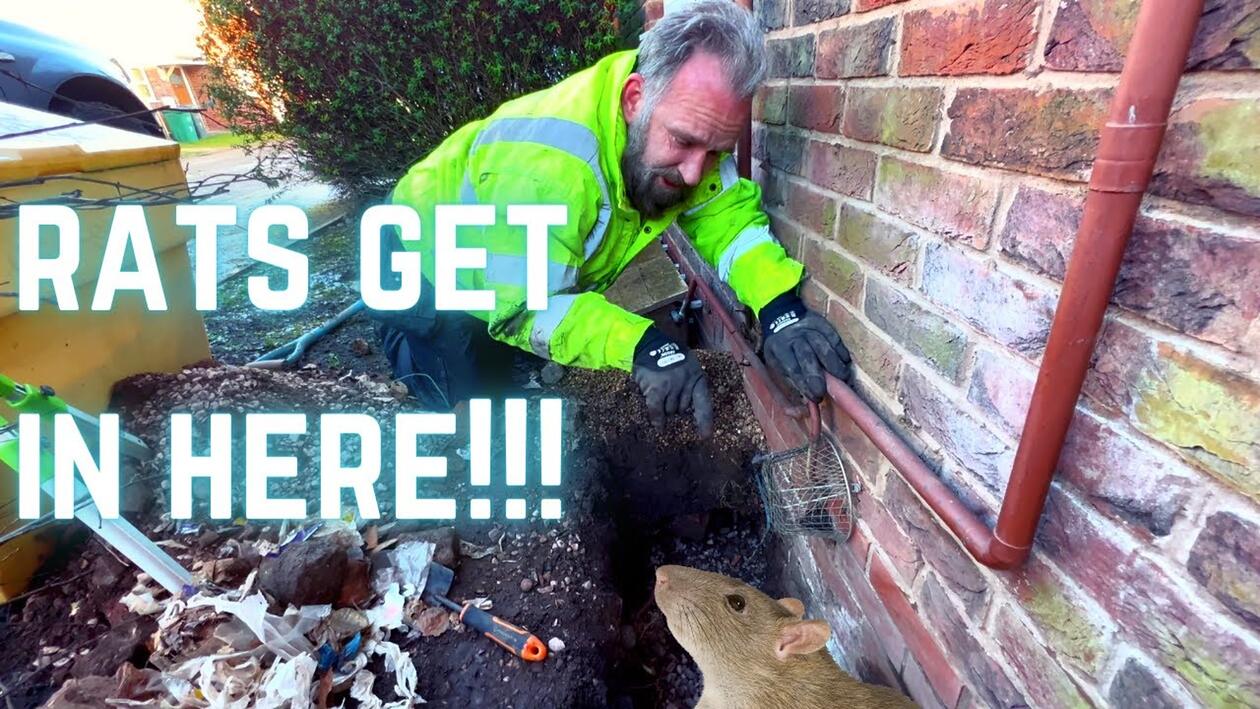
Video: RAT holes around your house? How to stop rats burrowing, from Pest Interceptors.
Why Kessler Park homeowners book through us
Three things that matter on a terraced lot above a creek.
Two crawl spaces on one slope
On a 1920s house stepped into a hillside the crawl space is a foot deep at the top of the slope and tall enough to stand in at the bottom, so the inspection covers them separately and the quote reflects it. The uphill side is where expansive clay bears against skirting and retaining walls and pulls away from them through a dry summer, which is why gaps there are seasonal. Dallas houses before about 1965 are pier-and-beam, and on a slope that perimeter is the longest part of the job.
Dallas homes built before roughly 1965 are mostly pier-and-beam
Mortar with metal in it
Kessler Park houses carry stone retaining walls, stone steps and masonry skirting, and a gap in any of those is closed with mortar containing embedded metal rather than mortar alone, because a rat will work at a soft joint until it gives. Where the void behind the stone is wide, sheet metal goes in behind the visible face so the repair does not change the look of a 1920s wall. Every finished joint is probed against the quarter-inch standard UF/IFAS publishes.
A quarter inch is the rat-proofing standard, UF/IFAS Extension
The creek corridor treated as the source
Coombs Creek supplies water, cover, travel routes and burrowing banks to a population that never needed a house, so a closure list that stops at the walls is only half an answer. The brush, wood piles and ivy that bridge the corridor to the building get named, and limb contact with the roofline gets cut back, because UF/IFAS puts a roof rat's range at about 150 yards from its den and the trees along the creek are well inside that.
Roof rats range about 150 yards from the den, UF/IFAS Extension